PMS and the 2/20 Trap: Rich Enough for Worse Returns
Exclusivity is a fee schedule with better coffee. Rs 50 lakh pays Rs 27.5 lakh in marble over…
 January 4, 2026by cyborg.vaibhav@gmail.com7 min read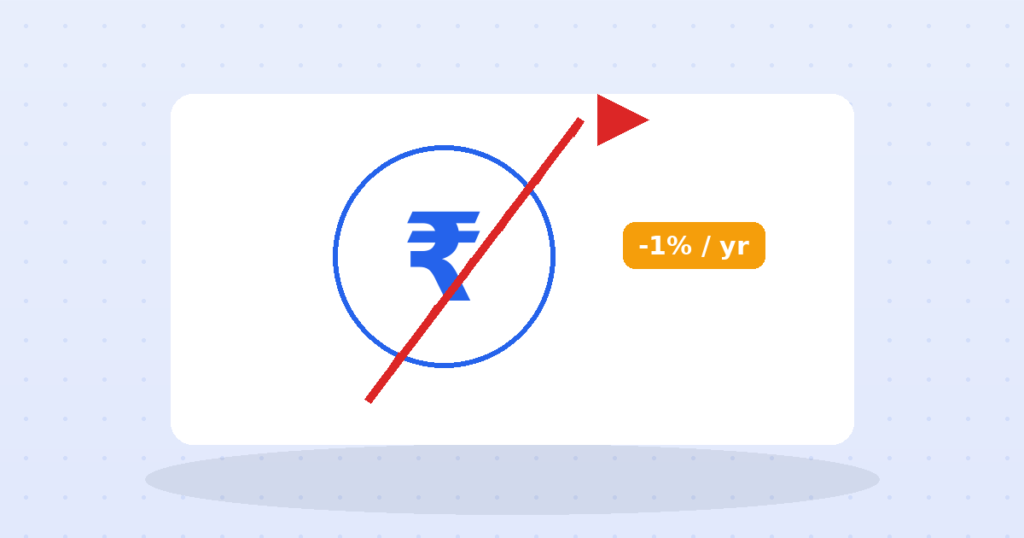
In 2016, Meera Bakshi’s neighbour — a nice man, mutual fund distributor, always available — filled one form for her. Meera is a physiotherapist in Chandigarh, and a ₹10,000 monthly SIP in a good equity fund seemed like a five-minute favour between neighbours. He hasn’t called since. He doesn’t need to. Every year, a slice of Meera’s entire and growing corpus is quietly routed to him, and it will be for as long as she stays invested. Not a fee for advice. A toll for a signature.
Every mutual fund comes in two identical versions: a direct plan and a regular plan. Same fund manager, same stocks, same everything — except the regular plan’s expense ratio carries an extra 0.5–1.5% a year, which the AMC passes to the distributor as “trail commission”. The word trail is doing the heavy lifting: it is charged not on what you invest this year, but on everything you have ever accumulated, every single year. As Meera’s corpus compounds, her neighbour’s income compounds with it. It is one of the few arrangements where a form filled a decade ago comes with an annual raise, indefinitely, for as long as the units sit in the regular plan.
One percent sounds like a rounding error. Compounding disagrees. Meera’s ₹10,000 a month for 20 years at 12% grows to about ₹99.9 lakh in a direct plan. The same SIP in the same fund’s regular plan, netting 11% after the trail commission, grows to about ₹87.4 lakh. The difference — ₹12.5 lakh — is more than everything she invested in her first five years. That is the price of not knowing one word on one form.
The five-year version of Meera’s numbers looks almost forgivable: at ₹10,000 a month for five years, the direct-versus-regular gap is a few lakh, easy to shrug off. Stretch the same SIP to twenty years and the gap becomes ₹12.5 lakh, because the toll is charged on a base that keeps growing — her own contributions, plus every year of returns those contributions have already earned. A 1% drag in year one costs almost nothing in rupee terms. The same 1% in year eighteen, applied to a corpus built over seventeen years of compounding, costs real money every single year from then on. This is precisely why the loss is so easy to miss at the start and so expensive to discover at the end.
Because the system is designed so nobody has to. The commission never appears as a separate line on the statement most investors glance at — it is deducted inside the NAV, invisibly, daily. Meera’s fund factsheet reports returns after the toll has already been taken. The distributor is not legally her adviser and owes her no fiduciary duty; he is a salesman paid by the manufacturer, and the manufacturer builds his income into her plan. Banks are the largest distributors of all, which is why the “relationship manager” always has a fund to suggest.
Here is the part almost nobody acts on. SEBI requires AMCs to disclose the actual commission paid to a distributor in the investor’s Consolidated Account Statement — the same CAS that lands in Meera’s inbox or postbox every month, covering every mutual fund folio she holds. The rupee amount her neighbour earned on her SIP is not a secret buried in a regulatory filing; it is sitting in a document she already receives and has never opened past the first page. The commission isn’t hidden from her. It is disclosed to her, and disclosure and attention are not the same thing.
The drag compounds just like returns do — a 1% annual difference barely shows in year one and quietly becomes lakhs over decades. The most common real-world 1% in India: the expense-ratio gap between a regular mutual-fund plan (bought through a distributor) and the direct plan of the exact same fund, which typically runs 0.5-1.5% a year. Same fund, same manager, same portfolio — different take-home.
Tax angle: fees hurt twice — the drag reduces your gains, but LTCG tax (12.5% on equity gains beyond ₹1.25L/yr) is charged on what's left, so the government shares your gains while the fee is yours alone. And unlike tax, the fee applies to your whole balance every year, gains or not. Checking a fund's expense ratio takes 10 seconds on the factsheet; this calculator shows what those 10 seconds are worth.
What the calculator settles for Meera: enter her SIP amount and the years she plans to stay invested, and it tells her the rupee gap between staying in the regular plan and switching to direct — the exact number that has been sitting, unread, in her CAS for years.
Check your account statement for the word “Regular” in the scheme name, and while you have it open, scroll to the commission-disclosure line in your CAS — the figure is already there, you only have to read it. If the scheme name says Regular, you can switch to the direct plan of the same fund. Buy future investments directly from the AMC’s website or any direct-plan platform. If you want advice, pay a flat-fee SEBI-registered investment adviser once a year — a bill you can see is always cheaper than a toll you cannot.
It does not mean every distributor-sold regular plan is a rip-off, or that Meera’s neighbour did something improper. He filled a form correctly and has been paid exactly what the regulations allow him to be paid, in exactly the way the regulations require it to be disclosed. It does not mean direct plans are automatically the right choice for everyone either — an investor who genuinely gets rebalancing advice, tax-loss guidance and hand-holding through a crash from a distributor may be getting real value for the toll.
What it does mean is narrower: the commission is not a secret Meera would need to investigate to find. It is a number the regulator has already required to be placed in front of her, every month, and the only step missing is opening the statement past page one. Most investors never take that step, not because the information is hidden, but because nobody tells them where in the document to look.
If a distributor genuinely rebalances your portfolio, talks you out of panic-selling in crashes, and services your paperwork — maybe. But know the price: on a growing SIP, easily lakhs, and the exact figure is already printed in your CAS. Most investors get the toll without the service.
Yes — a switch is a redemption plus a fresh purchase, so capital gains rules apply to the gains so far, and an exit load may apply within a year. Often still worth it: the tax is once; the 1% is forever.
Look past the folio-value summary on the first page. SEBI’s disclosure norms require the commission paid to your distributor to appear as a distinct line item within the statement, folio by folio, alongside the rest of your transaction and holding detail. It is easy to miss precisely because it sits after the numbers most investors stop reading at.
Regulatory source: SEBI mandates the Consolidated Account Statement and its distributor commission disclosure requirement for mutual fund investors. The reconstruction of Meera’s decade-long commission trail, the CAS-reading habit and the arithmetic on the regular-versus-direct gap are this article’s own.
Disclaimer: This article is for general information only and is not financial or tax advice. Consult a qualified advisor before making investment or tax decisions. Meera Bakshi is a composite character based on common regular-plan investing patterns, not a real person.
Exclusivity is a fee schedule with better coffee. Rs 50 lakh pays Rs 27.5 lakh in marble over…
Your large-cap fund hugs Nifty at nine times the fee. The costume costs Rs 10 lakh on a…
Agricultural income is exempt, but partial integration uses it to pick a higher rate for your salary. The…
Deferring tax is an interest-free loan from the government. Growth vs IDCW, employer NPS, gain harvesting, CGAS, section…
EPF and NPS both carry real equity exposure, while EPF-VPF tax thresholds are twice as generous for government…
Medical inflation runs 10-14% a year in India, nearly double the 5-6% general inflation most retirement calculators assume.