PMS and the 2/20 Trap: Rich Enough for Worse Returns
Exclusivity is a fee schedule with better coffee. Rs 50 lakh pays Rs 27.5 lakh in marble over…
 February 2, 2026by cyborg.vaibhav@gmail.com7 min read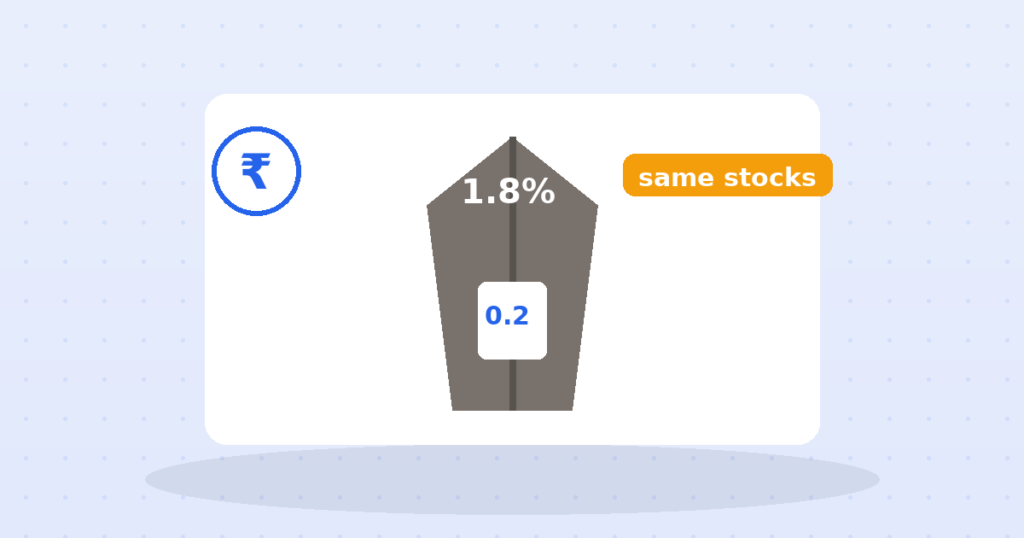
Deepak’s large-cap fund has held roughly the same ten stocks, in roughly the same weights as the Nifty 50, for as long as he’s checked its factsheet — three years now. He pays it 1.8% a year for what his bank relationship manager in Pune called “active management.” In April, a notice arrived: under new SEBI rules that took effect this year, his fund’s asset management company was introducing a performance-linked fee on top of the base charge. Deepak nearly signed the acknowledgment without reading further. A fund that already moves exactly like the index is now positioned to charge him extra in any year the index itself simply goes up — which is most years — for delivering nothing an index fund at a tenth the cost wouldn’t have delivered anyway.
Deepak is a composite character — a stand-in for a pattern that shows up constantly among regular-plan investors sold large-cap funds through a bank relationship, not a real folio. His numbers are invented. The regulatory mechanism now sitting on top of his fee is not.
How this article was checked. The large-cap categorization rule and the new performance-linked expense structure below are described directly from SEBI’s own published circular and regulation as reviewed in July 2026. The SEBI (Mutual Funds) Regulations, 2026 took effect on April 1, 2026 — still recent as of this writing — and implementation details continue to be clarified by fund houses; check sebi.gov.in for the current framework before relying on a specific figure.
SEBI’s October 2017 circular on categorization and rationalization of mutual fund schemes defines “large cap” as, specifically, the top 100 companies in India by market capitalization — a fixed, SEBI-defined universe, not a manager’s discretionary judgment. Every large-cap scheme in the country is required to fish in that same pool of 100 stocks. With the investable universe defined identically for every large-cap fund by regulation, a manager who wants to avoid the career risk of visibly underperforming has every incentive to hold a portfolio that looks a great deal like the other 99 funds drawing from the same 100 names — and like the index itself.
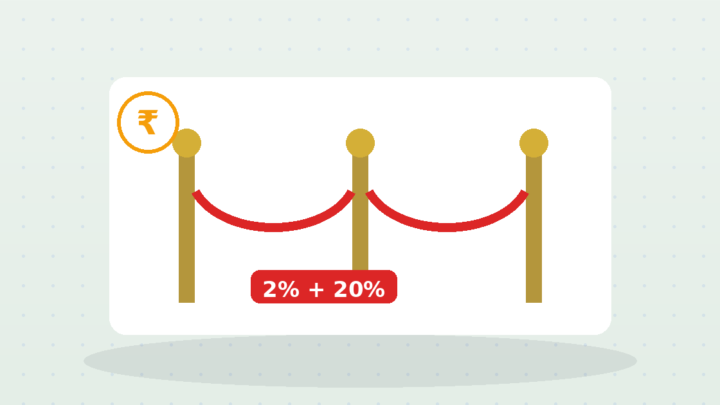
The SEBI (Mutual Funds) Regulations, 2026, effective April 1, 2026, replaced the older flat Total Expense Ratio construct with a Base Expense Ratio and, for the first time, formally permits schemes to charge a performance-linked fee on top of it, subject to conditions SEBI has laid down. The intent, as described in SEBI’s own regulatory materials, is to better align what a fund charges with the actual value it delivers. For a fund that has been quietly closet-indexing for years — already moving in near-lockstep with the benchmark — a performance-linked structure can mean charging extra in ordinary up years, since the fund’s returns will predictably track a rising index, without the fund ever having taken the active risk a performance fee is supposed to be compensating.
Deepak’s fund charges 1.8% against a comparable index fund’s roughly 0.2%. On ₹10 lakh over 15 years, that gap alone — 11.8% net versus 10.2% net — compounds to a difference of roughly ₹10.4 lakh, his original investment again, paid purely for holding the same fifty-odd companies with extra paperwork. Layer a performance-linked fee on top, triggered in ordinary years simply because the index rose and his closet-index portfolio rose with it, and the true cost of never having switched to an index fund grows further — for a decision that requires nothing more sophisticated than the fund manager continuing to do exactly what he’s already been doing.
Three checks, all public: the fund’s top-ten holdings should overlap heavily with the SEBI-defined top-100 universe if it’s genuinely a closet indexer; its month-to-month returns should track the benchmark within a whisker; and if your fund adopts a new performance-linked charge, ask specifically what hurdle rate and benchmark trigger it, since a hurdle set at or near the index’s own typical return means the fund earns its performance fee simply by existing in an up market, not by beating anything.
This is not a claim that all active management is a con, or that SEBI’s new performance-linked structure is itself a bad idea — better aligning fees with genuine, demonstrated skill is a reasonable regulatory goal, and a manager who takes real, high-conviction bets away from the index and consistently earns them deserves to be paid for it. The portfolio, not the label, tells you which kind of fund you actually own. For large-cap exposure specifically, where SEBI’s own categorization rules already narrow every fund to the same 100 stocks, the burden of proof for any fee above an index fund’s should sit heavily on the fund, not the investor.
Not on its own — many funds beat the index in any given year, rarely the same ones twice in a row. A single good year doesn’t distinguish genuine skill from ordinary variance around an index-hugging portfolio, especially now that a performance fee can trigger on exactly that kind of ordinary variance.
No — genuine high-conviction investing exists, particularly outside the large-cap category where SEBI’s rules leave more room to diverge, such as small caps or focused funds. Judge a manager over full market cycles, not a single year, and check the actual portfolio overlap with the benchmark before assuming either way.
Check the hurdle rate and benchmark SEBI’s rules require the fund to disclose for the performance-linked structure, and compare it against the fund’s actual historical overlap with its stated benchmark. A fund that has moved like the index for years triggering a performance fee on an index-level hurdle is not being rewarded for skill.
For large-cap exposure specifically, an index fund or ETF is a reasonable default given how narrow SEBI’s own categorization makes genuine differentiation. Outside large caps, where managers have more room to diverge from a benchmark, judge each fund on its own demonstrated behavior rather than applying a blanket rule.
Statutory sources, all official: SEBI, Mutual Funds Regulations 2026, effective April 1, 2026, for the Base Expense Ratio and performance-linked fee framework; SEBI’s October 2017 circular on Categorization and Rationalization of Mutual Fund Schemes, for the top-100-companies definition of “large cap.” The framing of a closet-index fund’s new performance fee as a specific, quantifiable added cost is Linqz’s own analysis, not stated as such by SEBI.
Disclaimer: General information, not investment advice, and Linqz is not a SEBI-registered investment adviser or research analyst. “Deepak” is a composite character with invented finances, not a real person. SEBI’s mutual fund expense and categorization rules are set by regulation and can be updated — verify current requirements at sebi.gov.in before acting, and consult a qualified professional about your own portfolio.
Exclusivity is a fee schedule with better coffee. Rs 50 lakh pays Rs 27.5 lakh in marble over…
One form filled in 2016 still earns him a raise every year. See the Rs 12.5 lakh the…
Agricultural income is exempt, but partial integration uses it to pick a higher rate for your salary. The…
Deferring tax is an interest-free loan from the government. Growth vs IDCW, employer NPS, gain harvesting, CGAS, section…
EPF and NPS both carry real equity exposure, while EPF-VPF tax thresholds are twice as generous for government…
Medical inflation runs 10-14% a year in India, nearly double the 5-6% general inflation most retirement calculators assume.