
The Benchmark Switcheroo: Beating an Index With Its Pockets Sewn Shut
For two decades funds compared dividend-inclusive returns against a dividend-free index. SEBI ended it in 2018; the folklore…
 February 14, 2026by cyborg.vaibhav@gmail.com7 min read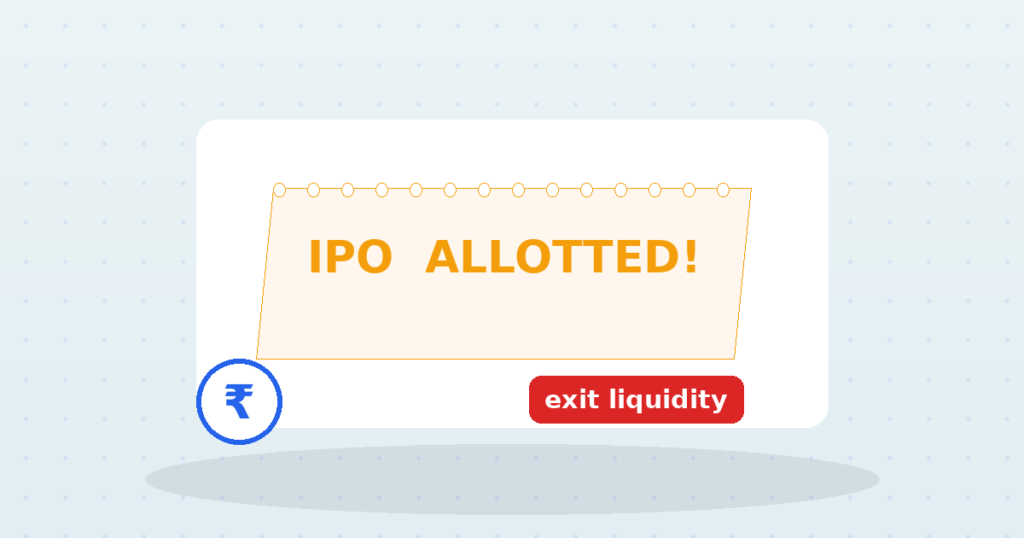
The WhatsApp group knew the number before the newspapers did: “GMP ₹180! Listing pop confirmed!” Ashwin Bhatia, 26, a customer support lead in Indore, applied for the IPO like everyone in the group, got his allotment, watched the stock list at a premium, and genuinely felt like an investor. Eighteen months later the stock was 40% below its listing-day high, the anchor investors were long gone, and the group had moved on to a new GMP. Nobody posted their annualised returns. Nobody ever does — and almost nobody in the group had noticed that the money they’d been “risking” every fortnight was never actually leaving their account in the first place.
An IPO’s price is not set to be fair to you; it is set by bankers paid by the seller to maximise proceeds while leaving just enough sparkle for a first-day pop. The grey-market premium — an unofficial, unregulated betting line — exists to manufacture urgency. Here is the tell the group never discusses: in genuinely underpriced issues, institutional demand is so heavy that your retail allotment gets rationed to a token; in overpriced issues nobody smart wants, you get everything you asked for. Full allotment is often the market’s politest warning.
Since SEBI mandated ASBA (Applications Supported by Blocked Amount) for all retail IPO applications, your money is never actually debited when you apply — it is blocked in your own bank account, still earning your account’s normal interest, and released back to you automatically if you aren’t allotted shares. SEBI’s own T+3 listing framework, mandatory since December 2023, requires that unallotted applicants’ blocked funds be released within three working days of the issue closing, and SEBI has separately mandated compensation to the investor if a registrar fails to unblock funds on time. This is genuinely good investor protection — but it also means the GMP group’s sense of “risking money every fortnight” is mostly theatre. The real cost was never the blocked amount; it was the retail allotment quota itself, tied up and unavailable for a better-researched application in the same window, and the emotional habit of chasing the next number instead of building an actual investing process.
Anchor investors’ shares unlock on a published schedule — a supply wave with a date on it. Promoter lock-ins expire later, another wave. The listing-pop crowd sells into day one; the unlock waves sell into month one and beyond. The retail holder who “got in early” is, structurally, the exit liquidity for everyone whose calendar he never checked.
A listing gain of ₹15,000 on one lucky allotment is a story. A CAGR computed across every application — the blocked funds, the misses, the post-listing slides — is a report card. Most pop-chasers have never computed theirs, because the number would end the hobby.
The lottery mechanism itself makes the story-versus-report-card gap worse than it looks. SEBI’s registrar-run allotment process for an oversubscribed retail category is designed to maximise the number of applicants who receive at least one lot, not to reward the applicants who applied earliest or most sincerely researched the business. That means a token allotment in a genuinely hot issue is close to random luck among everyone who applied, and the WhatsApp group member who “got in” on the best-performing IPO of the year is statistically indistinguishable from the one who didn’t — the lottery, not insight, made the difference. Retelling that as a skill is exactly how the group convinces itself the next GMP number deserves the same faith.
YOU ENTER a monthly amount and a number of years; IT TELLS YOU what disciplined compounding actually produces over that time, next to which any single lucky IPO allotment looks like the sideshow it is. What the calculator settles is which habit — queueing for the next GMP or investing steadily — is actually building your wealth.
CAGR (Compound Annual Growth Rate) is the single steady annual rate that would take your starting value to your ending value over this period — useful for comparing two investments fairly even if their paths were bumpy along the way. It ignores any money added or withdrawn in between; if you invested in instalments, a SIP-style calculator is a better fit than CAGR.
Tax: the post-tax CAGR card assumes listed equity/equity funds held over a year — 12.5% LTCG on the gain beyond ₹1.25L (per financial year), no indexation. If this were a debt fund or FD, the whole gain is instead taxed at your slab rate, which drags the post-tax CAGR further — at a 30% slab, a headline 8% pre-tax CAGR is really about 5.6% post-tax. Always compare investments on post-tax CAGR, not the brochure number.
Ashwin’s own IPO ledger, once he finally built one, showed something the group chat never discusses: across a dozen applications over three years, his blended annualised return was barely ahead of a savings account, once the misses and the post-listing slides were counted honestly alongside the one good pop everyone remembers. The applications themselves cost him nothing directly — ASBA saw to that — but three years of attention spent tracking GMP numbers instead of building one disciplined SIP is a cost that never shows up on any statement.
If you like a newly listed business, you lose nothing by waiting: let the pop fade, let the lock-ups expire, let two quarters of results replace the roadshow deck — the company will still be there. Never apply purely on GMP; it is a sentiment gauge run by parties who have inventory to move. Know that ASBA protects your funds while blocked, and that SEBI’s own rules entitle you to compensation if a registrar is late unblocking them — but don’t mistake that protection for the applications themselves being a good use of your time. Keep an IPO ledger: every application, every outcome, one CAGR — computed above. The spreadsheet retires more gamblers than any advice column.
None of this means every IPO is a bad bet or that GMP numbers are always wrong — a strong GMP correlates with strong demand often enough that it isn’t pure noise. It also doesn’t mean ASBA’s fund-blocking mechanism is a flaw to avoid; it is a genuine investor protection that keeps your money safe and interest-earning while you wait, exactly as intended. The point is narrower: safety of the mechanism is not the same thing as quality of the decision, and a habit built entirely around a number with no regulatory standing whatsoever is not the same thing as investing.
The survivors are legends; the majority that underperformed their listing price within a couple of years are simply never discussed at parties. You are being sold the memory of the winners, curated after the fact.
If you have genuinely researched the business and would happily buy at the IPO price with a full 5-year horizon — yes, and the pop becomes irrelevant. That is investing. Applying purely because a Telegram number is high is an entirely different thing.
SEBI’s framework entitles you to compensation from the registrar for the delay, calculated from the T+3 day the funds should have been released — a right almost nobody in a GMP group chat has ever needed to invoke, or even realises actually exists in writing.
Disclaimer: Ashwin Bhatia is a composite character based on common IPO-application and grey-market-premium patterns, not a real person. This article is for general information only and is not financial or tax advice. Consult a qualified advisor before making investment or tax decisions.
For two decades funds compared dividend-inclusive returns against a dividend-free index. SEBI ended it in 2018; the folklore…
Underperform long enough and the scheme vanishes into a sibling with better numbers. Your own CAGR is the…
Nifty fell 2%, your ETF showed -0.5%. That gap wasn't protection -- it was the price of selling…
Returns over several years can mislead. CAGR shows the smooth annual rate your investment actually grew at.
Agricultural income is exempt, but partial integration uses it to pick a higher rate for your salary. The…
Deferring tax is an interest-free loan from the government. Growth vs IDCW, employer NPS, gain harvesting, CGAS, section…