
The GMP Lottery: Full IPO Allotment Is the Market’s Politest Warning
Grey-market premiums manufacture urgency; lock-up calendars manufacture supply. Compute your all-in IPO CAGR before the next queue.
 February 4, 2026by cyborg.vaibhav@gmail.com7 min read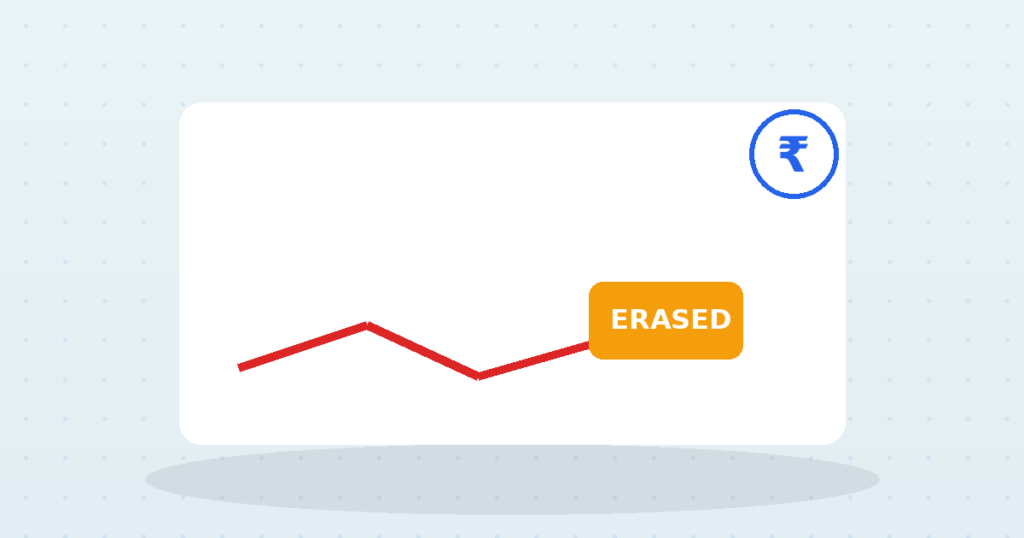
Kavita Iyer, a school teacher in Mysuru, finally decided to exit her underperforming fund — five years of trailing everything. When she logged in, the fund was gone. Not her money: the fund. Merged into a sibling scheme with a better history, its NAV chart now beginning, conveniently, from the merger date. The bad years did not just end. They were un-happened.
Kavita is a composite character based on patterns common to mutual fund scheme mergers in India — the underperformer quietly folded into a stronger sibling, the letter filed unread, the vanished five-year chart. She is not a real person, but the SEBI circular that explains what happened to her fund’s history is real, and it is short enough to quote.
When a scheme underperforms long enough to embarrass the brochure, an AMC can merge it into a healthier sibling. The failed fund’s track record vanishes from every comparison screen; the surviving fund’s cleaner history becomes the story sold to the next investor. Across the industry this creates survivorship bias: the average past return you see on any platform is the average of the survivors — the funds bad enough to die were buried with their numbers. The menu always looks better than the meal ever was.
Mergers are also not free for you. Depending on the schemes’ categories, your money may land in a fund with a different mandate and risk than you chose — and although scheme mergers themselves are structured to be tax-neutral, your carefully chosen fund has effectively been swapped under you, with a letter you probably filed unread. The genuinely scathing part: the same industry that insists “past performance matters, look at our 5-year returns” quietly deletes past performance whenever it argues the other way.
Fund factsheets measure the fund’s life, not yours. You bought in 2019, added in 2021, switched after a merger — your personal return can differ wildly from the chart. Compute your own CAGR from what you actually paid and what you actually hold; it is the one number no merger can launder.
What happened to Kavita’s fund is not a platform bug or an AMC hiding something illegal. SEBI’s circular SEBI/HO/IMD/DF3/CIR/P/2018/69, dated 12 April 2018, standardised exactly this situation, and its own wording is worth reading rather than paraphrasing: when a weaker scheme (the “Transferor Scheme”) merges into a stronger one (the “Transferee Scheme”) and the surviving scheme’s features are retained, the circular says AMCs must disclose “the performance of the scheme whose features are retained” — meaning the surviving fund’s history, not the merged-away one. If the two schemes had similar features, a weighted average is shown instead. Either way, the underperforming scheme’s standalone track record stops being the number a new investor sees.
The same circular has a paragraph that almost nobody in Kavita’s position ever uses. It says the erased scheme’s past performance “may also be made available on request with adequate disclaimer” — SEBI never deleted the number, it only stopped requiring the AMC to volunteer it. The five bad years Kavita thought were gone are almost certainly sitting in a document she is entitled to ask for and never has.
What the calculator settles for Kavita: enter what she actually invested, on the actual dates she invested it, across both the original scheme and its merged successor, and it tells you her real personal CAGR — a number the SEBI-compliant factsheet was never required to show her in the first place.
CAGR (Compound Annual Growth Rate) is the single steady annual rate that would take your starting value to your ending value over this period — useful for comparing two investments fairly even if their paths were bumpy along the way. It ignores any money added or withdrawn in between; if you invested in instalments, a SIP-style calculator is a better fit than CAGR.
Tax: the post-tax CAGR card assumes listed equity/equity funds held over a year — 12.5% LTCG on the gain beyond ₹1.25L (per financial year), no indexation. If this were a debt fund or FD, the whole gain is instead taxed at your slab rate, which drags the post-tax CAGR further — at a 30% slab, a headline 8% pre-tax CAGR is really about 5.6% post-tax. Always compare investments on post-tax CAGR, not the brochure number.
When a merger notice arrives, treat it as a decision point, not junk mail: SEBI requires unitholders to be given a window — typically at least 30 calendar days where a scheme merger is involved — to exit at the prevailing NAV without paying exit load. That window is the one moment you are structurally protected; missing it means you are holding the surviving scheme by default, on its terms, not the ones you originally chose. Check the surviving fund’s mandate, fee and portfolio as if buying fresh — because you are. Ask the AMC in writing for the merged-away scheme’s full performance history under the “available on request” clause — it costs nothing and most investors never ask. Keep your own records of invested amounts; platform charts reset, your spreadsheet should not. And discount every “category average return” you see by remembering who is missing from the average.
None of this means every merger is a cover-up, or that Kavita’s AMC broke any rule. Scheme mergers can be genuinely good for investors — a small, high-cost fund folded into a larger, cheaper one lowers everyone’s expense ratio, and SEBI’s tax-neutrality treatment means the merger itself does not trigger a capital gains bill. It also does not mean SEBI is complicit in hiding bad performance: the 2018 circular exists precisely because AMCs were disclosing merger performance inconsistently, and standardising it, even in the survivor’s favour, is more transparent than the free-for-all before 2018. What it does mean is narrower: “disclosed by default” and “the whole truth” are different standards, and the gap between them is exactly the size of the request Kavita never made.
Kavita eventually wrote to the AMC and got the merged-away scheme’s full five-year record by email within a week. It was every bit as bad as she remembered. Knowing that, she said, was oddly more useful than not knowing — it let her judge the AMC itself, not just the fund it now wanted her to hold.
Sometimes — a tiny fund folding into a larger, cheaper one can lower costs. The test is the same as any purchase: would you buy the surviving fund today, at its fee, with your goals? If not, the exit window is your friend.
Look for the scheme’s full history including name changes and mergers in its Scheme Information Document — the marketing pages will not volunteer it. Then judge your own holding by your own CAGR, computed above.
Legally, yes — the underlying track record still exists and SEBI’s own circular allows for it to be produced on request with a disclaimer. Practically, no — almost nobody asks, so it stops functioning as information the market actually uses, even though nothing was destroyed. That gap between “exists” and “is seen” is exactly where survivorship bias in fund comparisons comes from.
Regulatory source: SEBI circular SEBI/HO/IMD/DF3/CIR/P/2018/69 (12 April 2018) governs performance disclosure after scheme mergers; SEBI’s mutual fund regulations require an exit-without-load window on scheme mergers. The reconstruction of what this means for an individual holding, the CAGR framing and the character of Kavita are this article’s own.
Disclaimer: This article is for general information only and is not financial or tax advice. Consult a qualified advisor before making investment or tax decisions. “Kavita Iyer” is a composite character based on common mutual fund merger patterns, not a real person. SEBI circulars and exit-load rules change — verify current requirements at sebi.gov.in before acting.
Grey-market premiums manufacture urgency; lock-up calendars manufacture supply. Compute your all-in IPO CAGR before the next queue.
For two decades funds compared dividend-inclusive returns against a dividend-free index. SEBI ended it in 2018; the folklore…
Nifty fell 2%, your ETF showed -0.5%. That gap wasn't protection -- it was the price of selling…
Returns over several years can mislead. CAGR shows the smooth annual rate your investment actually grew at.
Agricultural income is exempt, but partial integration uses it to pick a higher rate for your salary. The…
Deferring tax is an interest-free loan from the government. Growth vs IDCW, employer NPS, gain harvesting, CGAS, section…