
Rent in the City, Buy Farmland, Pay No Tax: The Advice That Raises Your Tax Bill
Agricultural income is exempt, but partial integration uses it to pick a higher rate for your salary. The…
 January 26, 2026by cyborg.vaibhav@gmail.com7 min read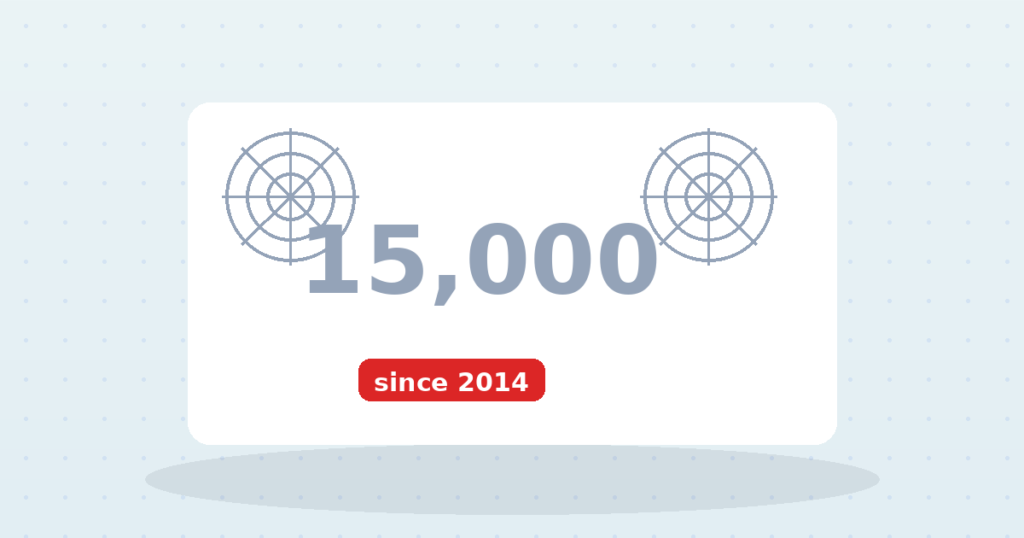
Subramani Pillai retired in 2024 after 34 years as a factory supervisor in Kochi — EPF deducted every single month, statutory pension contributions paid in full. His EPS pension: ₹6,900 a month. His last drawn salary was ₹1.4 lakh. His driver’s son, delivering groceries, makes more in tips. Subramani — a composite character based on common EPS-pensioner patterns, not a real person — did not fail the system. The system contains a number that has not been updated since 2014, and his old age is priced in it.
The EPS pension formula is simple: pensionable salary × years of service ÷ 70. The trap is the definition of “pensionable salary” — capped at ₹15,000 a month, a ceiling last revised in September 2014. Your real salary is irrelevant. Thirty-five years of maximum service yields 15,000 × 35 ÷ 70 = ₹7,500 a month — the theoretical lifetime maximum. Twenty years of service: ₹4,286. While your salary, your rent and your medicine bills tracked the present, your pension was computed in a museum.
No minister ever announced “we are cutting pensions”. Nobody had to. Inflation does the cutting automatically — roughly 6% a year — while the ceiling stands still. Every year the ₹15,000 stays frozen is a stealth pension cut, passed without a vote. A decade of standing still has already halved its real value; the diligent contributor is the only one who does not know it, because the nominal number never moves.
Here is the part almost nobody explains properly. On 4 November 2022, the Supreme Court ruled in the EPFO higher-pension matter and, while upholding the 2014 amendment that introduced the ₹15,000 ceiling going forward, it also opened a path for certain existing and retired members to apply for pension on their actual higher salary rather than the capped one — provided they and their employer make an additional contribution to cover the shortfall, with interest, for the years the higher salary was not contributed on. EPFO has been implementing this in stages rather than all at once: an online facility for validating “joint options” was opened, deadlines were extended more than once, and as recently as January 2025 EPFO issued a fresh circular clarifying how the higher-pension option applies specifically to employees of exempted establishments — trusts that run their own provident fund rather than routing through EPFO directly.
Subramani is exactly the kind of member this window was built for — a long-service employee whose actual salary ran far above the ₹15,000 ceiling for years before he retired. Whether he benefits depends on whether he was a member before September 2014, whether his employer’s contribution records for the higher-salary years survive, and whether he can find and pay the arrears-with-interest demand EPFO calculates for him. None of that is guaranteed to be cheap, and none of it is guaranteed to be fast.
That second figure is illustrative only — the higher-pension option does not simply remove the cap and recompute for free; it requires the arrears-with-interest payment described above, and the final sanctioned amount depends on EPFO’s own calculation once an application is processed. But the scale of the gap is real, and it is why members with a long service history at a salary well above ₹15,000 are the ones for whom checking eligibility is worth the paperwork.
A ₹30,000-a-month retirement income — modest by any urban measure — needs roughly a ₹60 lakh corpus even at a generous 6% withdrawal rate. EPS will hand Subramani at best a quarter of that income, even before considering whether the higher-pension option comes through. The gap between what the formula pays and what groceries cost is yours to fill, and the earlier you learn this, the cheaper the filling is.
Uses the EPS-95 formula EPFO's own estimator uses — pensionable salary × pensionable service ÷ 70 — with the parts EPFO's page doesn't show: pensionable salary is capped at ₹15,000/month no matter what you earn (that cap, unchanged since 2014, is why EPS pensions feel small), service above 20 years earns 2 bonus years, and drawing early (from 50) cuts the pension 4% for every year before 58. Pension is also floored at ₹1,000/month. Members who opted for higher-wage pension under the 2022-23 Supreme Court window follow different math — this models the standard capped case.
Tax: EPS pension is fully taxable as salary income at your slab (it also gets the pensioner's standard deduction, and under the new regime a total income up to ₹12L pays nothing — so for most EPS-scale pensions the real tax is zero; set the slab accordingly). Remember EPS is only one leg of the same job's retirement: the EPF corpus (see the EPF Calculator) is the other, larger leg, and it's tax-free.
First, compute your actual entitlement above — most people have never seen their own number, and the shock is useful. Then treat EPS as what it is: a token, not a pension. Your EPF lump sum, NPS and your own SIPs are the real retirement plan. If you are within a decade of retiring, run the numbers this week; every year of delay raises the monthly SIP needed to plug the gap by more than you expect. Separately, if you were an EPS member before September 2014 and your actual salary ran well above ₹15,000, check your current eligibility for the higher-pension option directly on the EPFO member portal — the rules for who qualifies and by when have shifted more than once since the 2022 judgment, so treat any date or eligibility rule you read elsewhere as provisional until you confirm it there.
It does not mean the higher-pension option is free money waiting to be claimed — EPFO’s own arrears-with-interest demand for the years of under-contribution can run into lakhs, and for some members the extra pension is not worth the upfront cost. It does not mean every retiree qualifies; the window applies to specific categories of members defined by when they joined and whether they exercised particular options at the time, not to everyone who simply wishes their salary had counted in full. And it does not mean the ₹15,000 ceiling will necessarily be revised soon just because it has attracted attention — ceilings have gone years past their “due” revision date before, and a retirement plan built on the assumption of a future increase is not a plan.
Yes, in a November 2022 judgment, for specific categories of members who meet EPFO’s conditions and pay the required additional contribution with interest — not as a blanket rule for everyone. Implementation has continued in stages since, including a January 2025 circular covering exempted establishments specifically, so the current process is worth checking directly rather than relying on an old summary.
Perhaps — proposals surface regularly. But a plan that depends on a gazette notification arriving in time is not a plan. Build as if the ceiling is permanent; be pleasantly surprised if it is not.
Check directly through the EPFO member portal or your regional EPFO office, since eligibility turns on details like your date of joining, whether you were in service on the judgment date, and whether your employer’s contribution records for the higher-salary years are intact. Do not rely on a blog summary for the current deadline or process — EPFO has revised both more than once since 2022.
Disclaimer: This article is for general information only and is not financial or tax advice. Subramani Pillai is a composite character based on common EPS-pensioner patterns, not a real person. The EPS ceiling, the higher-pension eligibility rules and any deadlines change — verify the current status directly on epfindia.gov.in before acting. Consult a qualified advisor before making investment or tax decisions.
Agricultural income is exempt, but partial integration uses it to pick a higher rate for your salary. The…
Deferring tax is an interest-free loan from the government. Growth vs IDCW, employer NPS, gain harvesting, CGAS, section…
EPF and NPS both carry real equity exposure, while EPF-VPF tax thresholds are twice as generous for government…
Medical inflation runs 10-14% a year in India, nearly double the 5-6% general inflation most retirement calculators assume.
India has 967 SEBI-registered fiduciary advisers against over 1,33,000 commission-paid distributors.
5% minimum due, 36-42% annual interest, and a lost grace period on every new purchase.