
Digging Out of Student Debt Without Losing Your Mind
Student loans are the debt that shapes a decade of a lot of lives -- big balances, long…
 April 2, 2026by cyborg.vaibhav@gmail.com7 min read
The mailer arrives like clockwork whenever rates dip: “Refinance now — cut your payment $180/month!” It has found Paula Whitfield, 54, a hospital administrator in Louisville, KY, three times in eleven years, and three times she signed. Her payment did fall each time. So, curiously, did her progress: closing costs rolled quietly into the balance, and each new 30-year clock restarted her amortization at the steep end, where payments are nearly all interest. Eleven years of paying, and Paula’s principal has barely moved. The treadmill’s belt is smooth; that is its job — and each time, a federal right that could have let her walk away penalty-free within three days went completely unused.
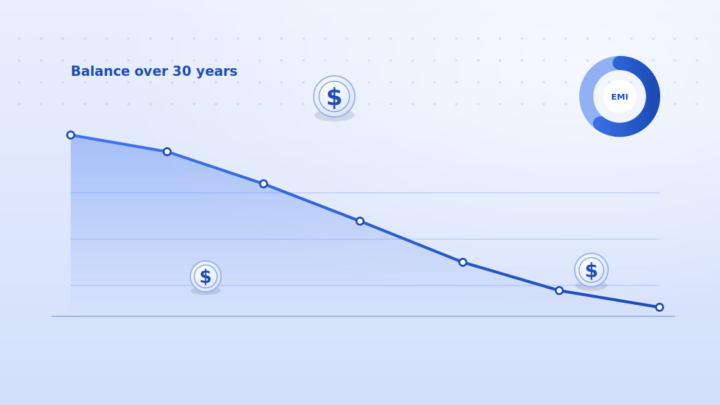
Amortization is front-loaded: early years pay mostly interest, late years mostly principal. Refinancing into a fresh 30-year term teleports you back to the interest-heavy start — every time. Meanwhile $6,000–10,000 of closing costs per round (origination, title, appraisal, the parade) typically rolls into the loan, so the balance rises at each “saving”. The mailer’s math compares only monthly payments — never total interest, never the reset — because the payment is the only number that shrinks. Loan officers are paid per transaction; churn is not a bug in their business model, it is the business model.
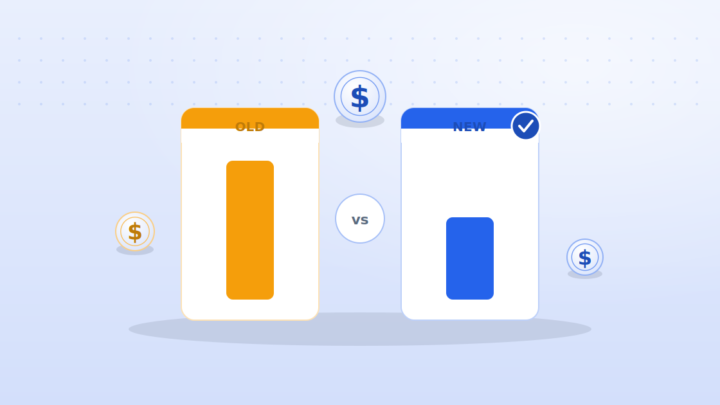
Take a $400,000 loan at 6.5%, five years in (balance ~$374,400). Refinance at 6.0% into a new 30-year with $8,000 rolled in: the payment falls by about $250 — and total remaining cost rises by roughly $67,000, because 25 years of remaining schedule became 30 interest-heavy ones. The same 6.0% taken as a 25-year term (or the new 30 paid at the old payment) flips the deal genuinely positive. The rate was never the trap. The clock was.
What almost nobody tells refinancing borrowers is that federal law already builds in a cooling-off period designed for exactly this treadmill. Under Regulation Z (12 CFR 1026.23), implementing the Truth in Lending Act, refinancing your primary residence gives you a right of rescission — three business days after signing to cancel the new loan entirely, penalty-free, with any fees already paid refunded. It applies specifically to refinances of an existing mortgage on your principal residence with the same or a genuinely different lender, not to a purchase-money mortgage. Separately, TRID rules require the lender to provide a Closing Disclosure at least three business days before closing, giving you a mandatory window to actually compare the new loan’s APR and total interest against your current one before you’re even at the signing table. Paula never used either window in three refinances — she signed at the table each time, the same day the paperwork arrived.
YOU ENTER the new rate and the term you’re being offered; IT TELLS YOU the full amortization schedule at that rate and term, so you can see in the rescission window whether the deal actually shortens your payoff or just resets your clock. What the calculator settles is the number the mailer never shows: total remaining interest, not the monthly payment.
Indicative only. An ARM reset here recomputes the payment for the remaining balance and term. Most US mortgages have no prepayment penalty — confirm with your lender. Your real monthly cost also includes property tax, insurance and possibly PMI.
Across Paula’s three refinances, her monthly payment kept falling and felt like progress every time. Measured a different way — total interest paid across the full eleven years versus total interest she’d have paid keeping her original amortization schedule and simply chasing the lower rate at the same remaining term — the treadmill cost her tens of thousands of dollars she never saw itemized on any single statement, because no statement ever shows “years of amortization you gave back.”
The three-day windows existed at every one of those signings, and Paula used none of them, because nobody at the closing table framed the rescission period as anything other than a formality to acknowledge and move past quickly. A borrower who actually read the Closing Disclosure during its mandatory three-day review window, run the true total-interest comparison, and only then decided to proceed would have caught at least one of the three refinances as a net loss before ever signing — not after, when the only recourse left is a rescission she’d have to actively invoke within days of a decision she’d already made.
Judge every refinance on three numbers the mailer omits: total remaining interest before versus after, the new term versus your remaining years, and closing costs paid versus rolled. The clean rules: match the new term to your remaining term (or shorter); pay costs upfront if you can, and compute the break-even months (costs ÷ true monthly saving) against how long you will actually keep the house; and if the payment falls, keep paying the old amount — the difference attacks principal at the new, cheaper rate. Use the TRID three-day Closing Disclosure window to actually run these numbers before signing, and remember the Reg Z rescission right exists afterward if you signed in a hurry and the math doesn’t hold up. A refinance should genuinely shorten your story, not simply resell you the exact same first chapter all over again.
None of this means refinancing is usually a bad idea, or that lenders who send rate-drop mailers are acting in bad faith. A refinance that keeps the remaining term honest, that’s paid for in cash rather than rolled into the balance, and that genuinely lowers total interest is one of the better moves available to a homeowner. The point is narrower: “the payment went down” is not the same test as “I am better off,” and the two federal disclosure and rescission windows exist specifically so a borrower can tell the difference before it’s too late to matter. Treating the rescission period as a mere formality to sign past, rather than as an actual decision point, is the single habit that turns a genuinely useful refinancing tool into a treadmill.
A genuinely meaningful rate drop (~0.75%+), several years of remaining term, staying put well past break-even, and the discipline to keep the clock honest. All four together — then it is one of the best moves available in personal finance.
The costs are always in the rate somewhere — usually 0.25–0.5% higher forever. Fine for short horizons, expensive for long ones. Nothing in a mortgage is ever truly free; it is only relocated to somewhere less visible.
It applies to refinances of your primary residence, whether with your current lender or a new one. It generally does not apply to a purchase-money mortgage or, in most typical cases, a refinance of a second home or an investment property you don’t personally live in.
Disclaimer: Paula Whitfield is a composite character based on common mortgage-refinance patterns, not a real person. This article is for general information only and is not financial or tax advice. Consult a qualified advisor before making investment or tax decisions.
Student loans are the debt that shapes a decade of a lot of lives -- big balances, long…
A personal loan is the financial equivalent of fast food: fast, everywhere, and quietly expensive. Unsecured, quick to…
A friend signed for a 30-year mortgage, looked only at the monthly payment, decided it "felt fine," and…
Rates tick down and your inbox fills with offers: refinance your mortgage and save thousands. It's a real…
After years of mortgage payments and rising prices, a lot of homeowners are sitting on real equity. A…
See how much of your payment is interest vs principal, and why extra payments made early save far…