The Refinance Treadmill: Lower Payment, Longer Sentence
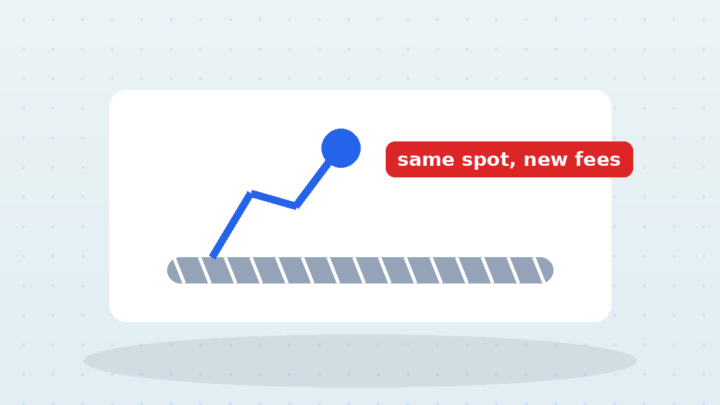
Each refi resets the interest-heavy years and rolls in fresh costs. Keep the rate; keep the clock honest.
 November 23, 2025by cyborg.vaibhav@gmail.com9 min read
After years of mortgage payments and rising prices, a lot of homeowners are sitting on real equity. A HELOC — a home equity line of credit — lets you borrow against it, usually at a lower rate than unsecured debt, drawing money as you need it like a credit card backed by your house. The comparison below shows what that borrowing costs.
Barry Nakashima, an aerospace machinist in Anchorage, Alaska (a composite drawn from HELOC borrowers like him, not a real individual), opened a HELOC nine years ago to help finance a garage addition and a used boat. The interest-only payment was small enough that he barely noticed it on top of his mortgage. He is now in year nine of a ten-year draw period, and nobody at the credit union mentioned, in plain terms, what happens on the first day of year eleven.
That lower rate is the appeal, and it’s real. But read the phrase again: backed by your house. That’s the whole story. You’ve traded a high rate for a serious risk — fall behind on a HELOC and the asset on the line isn’t your credit score, it’s your home. Banks can foreclose on a defaulted HELOC just as they can on a mortgage, because legally it’s a second lien against the same property.
Here is the part of a HELOC’s structure that gets the least attention at signing, and does the most damage nine or ten years later. A HELOC is not one loan with one payment; it is two distinct phases stitched together, and the transition between them is where borrowers like Barry get blindsided. The Consumer Financial Protection Bureau describes this directly: during the draw period — commonly around ten years — a HELOC functions like revolving credit, and many plans allow interest-only minimum payments, meaning the borrower’s required payment can cover none of the actual principal for the entire first phase of the loan. When the draw period ends, the loan converts to a repayment period, commonly around twenty years, during which the payment must amortize the full outstanding balance to zero — principal and interest both, on a fixed schedule, whether or not the borrower planned for it.
The CFPB’s term for what happens at that seam is payment shock — a sudden, often severe rise in the required monthly payment the moment the repayment period begins, driven by three things stacking at once: whatever balance is still outstanding, the interest rate at that moment (often variable, so it can be higher than when the draw period opened), and how few years remain to amortize it. Nobody sends a countdown notice years in advance with the actual new number attached; the borrower typically learns the size of the jump only as the transition approaches.
Example: draw $40,000 on a HELOC at 9% and repay it over 10 years once the draw period ends. At that rate and term you’d pay somewhere in the neighborhood of $18,000-20,000 in interest over the life of the repayment — a real cost, though typically far less than carrying the same balance on a credit card at 24%.
Now put Barry’s own number on it. He has carried a revolving balance of roughly $38,000 through most of the draw period, at an interest-only payment of around $285 a month at today’s rate. He has never made a payment that reduced that $38,000 by a single dollar. When his repayment period opens next year, amortizing that same balance over 20 years converts his $285 interest-only payment into a payment that includes real principal reduction — the exact new figure depends on the rate at that moment, but the structural fact is fixed regardless: for the first time in nine years, his payment will be doing a different job than it has ever done before.
Used well, it’s a powerful tool. For a value-adding home renovation, consolidating high-interest debt into a far cheaper rate, or bridging a genuine, planned need, a HELOC can be the smartest large-ticket borrowing available — and the interest may even be tax-deductible when used to buy, build, or substantially improve the home securing it (confirm the specifics with a tax pro).
Used carelessly, it’s how people put their most important asset at risk for things that won’t last. Tapping home equity to fund a lifestyle, a vacation, or a depreciating purchase turns your house into an ATM with foreclosure attached.
A few guardrails worth taking seriously. Watch the structure: most HELOCs have a variable rate that can rise, and a “draw period” (often 10 years) of interest-only payments followed by a much larger payment when principal repayment kicks in. Borrow well within what you could repay even if your income dipped or rates climbed further. And never drain your equity to zero — leave a cushion.
Who this matters for most: homeowners with genuine equity and a specific, productive plan for the money — not a general sense that “the rate is good, so why not.” Use it for things that build or save, never just spend.
HELOC marketing sells flexibility; the structure sells risk transfer. Variable rates float on prime — the ‘affordable’ 7% intro becomes 10%+ without a vote; the draw period’s interest-only minimums manufacture a decade of comfortable non-progress, then the repayment phase doubles payments on schedule and on purpose. And the collateral clause everyone signs and nobody reprices: spend it on a kitchen or a cruise, the debt sits on your home either way.
Bank-side games: teaser rates with floors, annual fees, early-closure fees for escaping, and ‘you have untapped equity!’ mailers that are inventory notices about your house. Equity is not income; a HELOC converts your shelter’s cushion into the bank’s lowest-risk lending — that’s why they market it so warmly.
The calculator settles the one question that matters more than the interest rate itself: not “is a HELOC cheap,” but “can I actually afford what this specific balance turns into once the draw period ends.” Barry could run this the day he reads this article, using his real $38,000 balance and real rate, and know his answer months before the credit union’s letter arrives — instead of finding out on the statement, the way most borrowers do.
It does not mean HELOCs are a trap, or that anyone who has one is in trouble. Plenty of borrowers use the draw period exactly as intended — drawing for a specific project, repaying ahead of schedule, and never carrying a large balance into the repayment period at all. It also does not mean the lender did anything improper by structuring the loan this way; draw-then-repay is the standard shape of a HELOC nationwide, and it is disclosed in the loan documents even when nobody walks a borrower through what it means in practice.
What it does mean is narrower: a HELOC’s real cost is not fully knowable from the draw-period payment alone, and treating that early payment as “what this loan costs me” is the mistake that turns a useful tool into a shock. Barry’s problem isn’t that he took out a HELOC. It’s that for nine years, nobody — including him — ran the number on what year eleven looks like.
HELOC for staged, short-horizon needs you’ll repay fast; cash-out only when the blended math beats it; personal loan when you refuse to collateralize the house. The worst choice is whichever you didn’t compare.
Only when proceeds buy/build/improve the securing home, within limits — the cruise is not deductible, whatever the branch implied. Keep proceeds paperwork; the IRS asks.
Yes — paying down principal voluntarily during the draw period, even though it isn’t required, directly shrinks the balance that gets amortized later, which is the single biggest lever a borrower controls. Some lenders also allow refinancing the HELOC itself or converting a portion of the balance to a fixed rate before the transition; ask specifically about this well before the draw period’s final year, not after the letter arrives.
Regulatory source: the Consumer Financial Protection Bureau (consumerfinance.gov) describes the draw-period and repayment-period structure of home equity lines of credit and the payment-shock risk at the transition between them; the IRS (irs.gov) governs when HELOC interest qualifies as deductible. The reconstruction of Barry’s balance and payment arithmetic is this article’s own.
Disclaimer: General information, not financial or tax advice. “Barry Nakashima” is a composite character representing a typical long-running HELOC borrower, not a real individual. HELOC terms, rates and tax deductibility rules vary by lender and change over time — confirm current terms with your lender and a tax professional before relying on them.
Each refi resets the interest-heavy years and rolls in fresh costs. Keep the rate; keep the clock honest.
Student loans are the debt that shapes a decade of a lot of lives -- big balances, long…
A personal loan is the financial equivalent of fast food: fast, everywhere, and quietly expensive. Unsecured, quick to…
A friend signed for a 30-year mortgage, looked only at the monthly payment, decided it "felt fine," and…
Rates tick down and your inbox fills with offers: refinance your mortgage and save thousands. It's a real…
See how much of your payment is interest vs principal, and why extra payments made early save far…