The Refinance Treadmill: Lower Payment, Longer Sentence
Each refi resets the interest-heavy years and rolls in fresh costs. Keep the rate; keep the clock honest.
 April 4, 2026by cyborg.vaibhav@gmail.com7 min read
Ray and Debra Sutton, first-time buyers outside Charlotte, North Carolina, signed a $400,000, 30-year mortgage at 6.5% and did the responsible thing: they budgeted for the $2,398 monthly payment and left themselves a cushion. Eighteen months later, their servicer sent a notice that the payment was jumping to $2,610 — not because their rate changed, but because of a line item almost nobody budgets for separately: the annual escrow analysis. Their fixed-rate loan was never actually fixed at $2,398. Only the principal-and-interest piece was.
Beyond the standard monthly payment, it breaks down exactly how much of each payment goes to interest versus principal over time, and what happens if you add extra payments — occasional or recurring — toward the principal.
A $400,000 loan at 6.5% over 30 years runs about $2,398 a month in principal and interest — and over the full term, total interest paid can exceed $460,000. That number is what most calculators show. It is not what shows up on the Suttons’ bank statement, because $2,398 was never the whole payment.
Most mortgages bundle property tax and homeowners insurance into the monthly payment through an escrow account, and federal rules under Regulation X (12 CFR 1024.17) require the servicer to run an escrow analysis at least once a year, comparing what was actually collected against what’s actually owed for taxes and insurance. When a county reassesses a home’s value — which routinely happens after a purchase, since the new sale price often becomes the new assessment — the tax bill jumps, the prior year’s escrow collection falls short, and the servicer raises the monthly payment to cover both the higher ongoing cost and the shortfall from the year just passed. The interest rate never moved. The “fixed” payment did, by more than $200 a month, and it can happen again at the next annual analysis if the assessment keeps climbing.
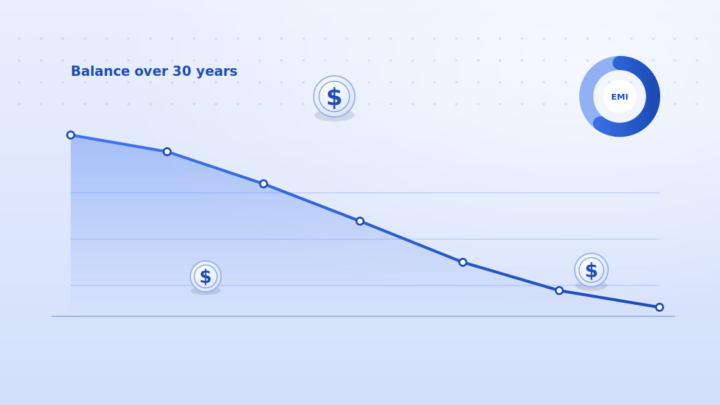
In the early years of a mortgage, most of each payment is interest, not principal — the amortization schedule is front-loaded that way by design. An extra $200 a month applied in year 2 knocks years off the loan and saves far more total interest than the same $200 a month applied in year 25, when most of the payment is already going to principal anyway. Extra payments reduce the principal-and-interest piece; they have no effect on the escrow piece, which moves independently based on local tax and insurance costs.
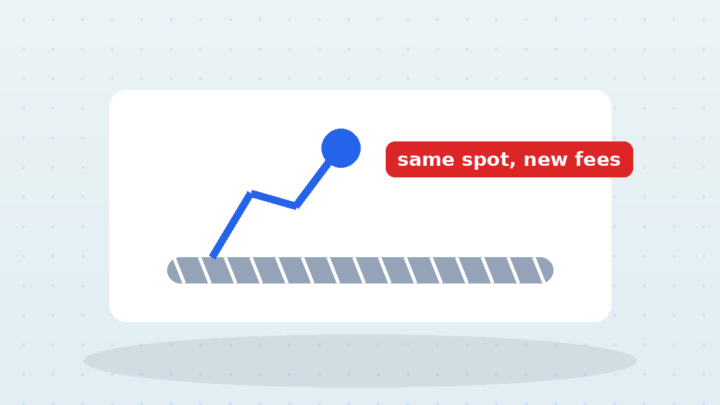
A lower monthly payment from refinancing can look like a win while quietly resetting your amortization clock — years 1 through 5 of interest-heavy payments start over, even if the new rate is better. Always compare total remaining interest, not just the new monthly figure, before refinancing. There’s a second, less obvious catch: under IRS Publication 936, points paid to buy down the rate on a purchase mortgage are generally deductible in full in the year paid, but points paid on a refinance must instead be deducted ratably over the life of the new loan. Pay $4,000 in points to refinance into a 30-year loan and the deduction is roughly $133 a year for 30 years — not $4,000 up front — a detail that changes the real after-tax cost of “buying down” a refinance rate.
YOU ENTER your loan amount, rate, and term, plus any extra payment you’re considering. IT TELLS YOU total interest with and without that extra payment, and how many years it shaves off — the number Ray and Debra never saw until it was already baked into eighteen months of statements.
The honest comparison isn’t “rent vs mortgage payment” — it’s rent vs (principal and interest + property tax + insurance + maintenance) minus (equity built + any appreciation). Most online comparisons quietly drop half of those terms, and almost none of them account for the escrow line growing on its own schedule, separate from the interest rate entirely.
If your rate is below what you could reasonably earn investing the same money, extra payments toward the mortgage usually aren’t the mathematically optimal move — though the guaranteed, risk-free “return” of eliminating debt still has real value for many people.
It saves substantial interest, but at a materially higher monthly payment. A 30-year loan with voluntary extra payments gives you the same payoff-speed option without the binding higher minimum payment.
You can request a copy of the escrow analysis and confirm the tax and insurance figures used are accurate — errors do happen. Opting out of escrow entirely is sometimes possible once you have enough equity, but most servicers require you to then pay property tax and insurance directly yourself, in full, on their due dates, which trades a smoother monthly number for two large annual bills you must manage yourself.
There’s no cap on how much the tax and insurance portion of a payment can rise, since it’s driven entirely by what the county assesses and what the insurer charges — both can move well beyond typical inflation in a single reassessment cycle, especially right after a purchase resets the assessed value to the new sale price. Regulation X requires the servicer to disclose the analysis and the new payment amount in advance, but it does not cap or smooth the size of the increase itself.
None of this makes a mortgage a bad decision — it makes the sticker payment an incomplete one. Ray and Debra’s $2,398 quote from their loan officer was the accurate answer to “what will principal and interest cost,” and a useless answer to “what will my housing payment be in year two.” Separating those two questions before signing, and re-checking the escrow analysis every year afterward rather than treating the first statement as permanent, is the actual discipline a “smart mortgage” requires — not a better rate, not a shorter term, just paying attention to the piece of the bill that was never fixed in the first place. A five-minute read of each year’s escrow analysis, compared line by line against the prior year’s, catches the increase before it shows up as a surprise on the next statement instead of after — and it costs nothing but the attention most people only spend once, at closing, and never again.
Sources: Consumer Financial Protection Bureau, Regulation X escrow account requirements (12 CFR 1024.17), at consumerfinance.gov; IRS Publication 936, Home Mortgage Interest Deduction, on the ratable deduction of refinance points, at irs.gov.
Disclaimer: This article is for general information only and is not financial or tax advice. “Ray and Debra Sutton” are composite characters with invented finances, not real people. Consult a qualified advisor before making financial or tax decisions.
Each refi resets the interest-heavy years and rolls in fresh costs. Keep the rate; keep the clock honest.
Student loans are the debt that shapes a decade of a lot of lives -- big balances, long…
A personal loan is the financial equivalent of fast food: fast, everywhere, and quietly expensive. Unsecured, quick to…
A friend signed for a 30-year mortgage, looked only at the monthly payment, decided it "felt fine," and…
Rates tick down and your inbox fills with offers: refinance your mortgage and save thousands. It's a real…
After years of mortgage payments and rising prices, a lot of homeowners are sitting on real equity. A…