The Minimum Payment Was Designed in a Lab
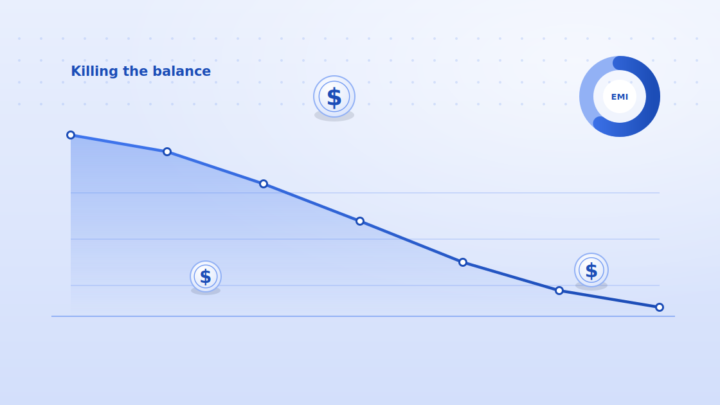
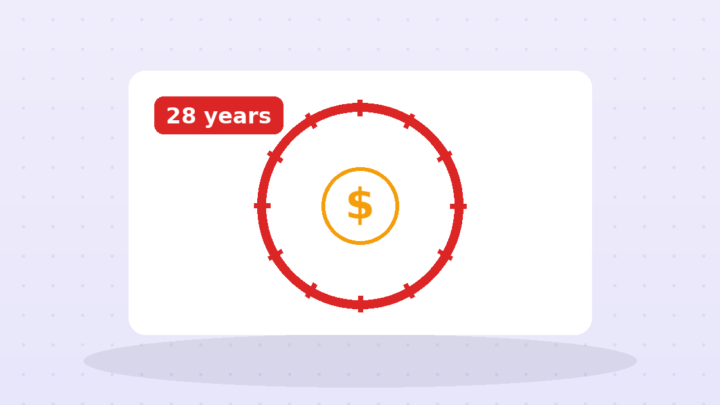
Interest plus 1%: enough to keep you current, never enough to free you. $5,000 becomes 19 years and…
 April 21, 2026by cyborg.vaibhav@gmail.com7 min read
Alex Torres, 33, a restaurant manager in Nashville, Tennessee, paid the minimum on a $4,000 balance for almost three years before noticing the box printed on every single statement that had been telling them the exact cost the whole time. Federal law requires it: a “Minimum Payment Warning” showing how long payoff takes at the minimum and the total interest if you never pay more — Alex’s own statement had been quietly answering the question for 34 months before Alex ever looked. Credit card minimum payments are calculated to keep you paying for a very long time — that’s not a coincidence, it’s the design. What’s surprising is that regulators already forced card issuers to disclose exactly how long, in a box almost nobody reads.
Balance and interest rate produce two very different pictures: how long payoff takes (and what it costs in total interest) at the minimum payment, versus at a fixed higher payment you choose.
An $8,000 balance at 22% paid at a typical minimum can take years to clear and cost thousands in interest — often more than the original balance itself. A fixed, higher monthly payment cuts both the time and the total interest dramatically, even at amounts that don’t feel dramatically larger.
Since the Credit CARD Act of 2009, Regulation Z (12 CFR 1026.7(b)(12)) requires every credit card statement to include a minimum-payment warning: a specific estimate of how many months it will take to pay off the current balance making only minimum payments, and the total cost in principal and interest if you do. Issuers must also show what a 36-month payoff would cost instead, so the comparison is right there in black and white every month. Alex’s own statements had been printing a payoff estimate north of 20 years for a balance that felt “almost handled” — the number was accurate, mandated, and completely ignored, the same way it is for most cardholders who treat the minimum-payment line as the only number on the page that matters.
Minimums are usually calculated as a small percentage of the balance plus that month’s interest — meaning in the early months, most of the payment is interest, and the principal barely shrinks. That’s why a balance can feel “stuck” for a long stretch even while payments are being made every month. Across multiple cards, paying the highest-interest balance first (while making minimums on the rest) saves the most money mathematically — called the avalanche method. Paying the smallest balance first (the snowball method) saves less in total interest but tends to build momentum and follow-through better for many people. Either beats making only minimums everywhere.
Alex’s own three years illustrate why the minimum-payment trap is so durable: the required warning box was accurate the entire time, but a monthly statement competes with rent, groceries, and a dozen other numbers demanding attention, and the box never changes its message enough to stand out. It says roughly the same thing every month, which is exactly why it stops registering as new information after the first few statements. Reading it once, seriously, and deciding on a fixed payment above the minimum is a one-time five-minute task that replaces years of the same warning quietly repeating itself unread.
A 0% intro-rate balance transfer can genuinely help, but usually carries an upfront transfer fee (often 3-5% of the balance) and the 0% period ends — any balance still remaining then reverts to a normal, often high, rate. That’s a manageable, disclosed cost. A harsher, easily confused product is “deferred interest” financing, common on store cards: if the promotional balance isn’t paid in full by the deadline, interest is charged retroactively on the entire original amount from the purchase date, not just on whatever’s left. The Consumer Financial Protection Bureau has specifically flagged deferred-interest plans as a category where the fine print matters more than the headline “0% for 18 months” banner, since paying off 95% of the balance on time can still trigger a full-balance interest charge on the other 5%.
YOU ENTER your balance, rate, and a monthly payment you’re considering. IT TELLS YOU the payoff time and total interest — the same comparison the CARD Act already requires your statement to show, just easier to actually see than the small print box most people skip past.
Yes — even a modest increase above the minimum meaningfully cuts both total interest and payoff time, since more of each payment starts reaching the principal sooner.
Not automatically — closing a card can shorten your average credit history and reduce total available credit, both of which can affect your credit score. Keeping it open with no balance is usually the safer default.
The terms and conditions will say explicitly whether unpaid interest is waived (a standard 0% intro APR) or charged retroactively on the full original balance if not paid off by the deadline (deferred interest). If that language isn’t clearly visible in the offer, ask directly before assuming a 0% balance behaves like a simple grace period.
It’s a required box, usually near the payment coupon or summary section, typically labeled something like “Minimum Payment Warning” and showing two figures: how long payoff will take at the minimum, and how much less it would cost and how much faster it would finish at a 36-month payoff pace. Every issuer has to include it in some form under Regulation Z — the exact layout varies, but the two numbers are always there.
None of this is presented to hide anything — it’s the opposite. The minimum-payment warning exists because regulators decided cardholders deserved to see the real cost up front, in writing, every single month, rather than discovering it after years of payments. Alex’s mistake wasn’t falling for a trick; it was never opening the envelope past the payment amount. The fix costs nothing and takes less time than finding the number on this page did — the statement was doing the math the whole time, in the same box, every month, in language that was never trying to trick anyone into missing it. It just needed to be read once, on purpose, instead of skimmed past on the way to the payment amount — the same five minutes it takes to run a real balance through the calculator above and pick a number bigger than the minimum.
Sources: Regulation Z, Truth in Lending Act minimum payment disclosure requirements (12 CFR 1026.7(b)(12)), and Consumer Financial Protection Bureau guidance on deferred-interest promotional financing, at consumerfinance.gov.
Disclaimer: This article is for general information only and is not financial or tax advice. “Alex Torres” is a composite character with invented finances, not a real person. Consult a qualified advisor before making financial decisions.
Interest plus 1%: enough to keep you current, never enough to free you. $5,000 becomes 19 years and…
Of all the numbers in personal finance, one deserves genuine urgency: a credit-card balance. At rates often north…
Claiming at 62 vs 70 can change your monthly benefit by more than 50%. See your own numbers…
Same contribution, two tax treatments, very different after-tax outcomes depending on one bet: your future tax bracket.
Skip the scary generic headline number. Work backward from your own real spending to find what you actually…
Salary isn't take-home pay. See what federal tax, payroll taxes, and deductions actually leave you with.