
Rate Hikes Travel First Class, Rate Cuts Walk
Hikes reach your EMI in one reset; cuts take scenic routes. Know your reset date, or fund the…
 February 25, 2026by cyborg.vaibhav@gmail.com7 min read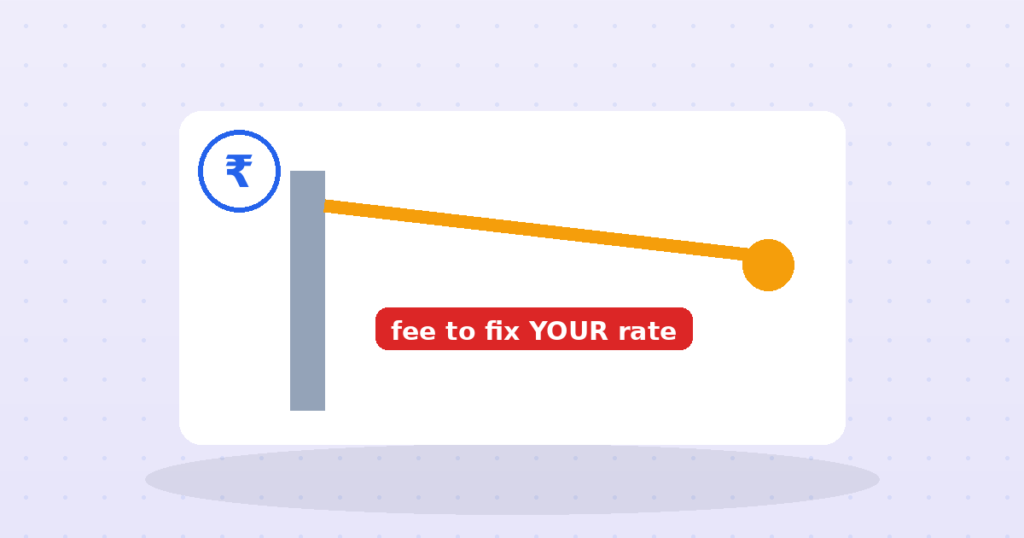
Sneha Kapoor, 42, an existing home-loan customer of eleven years’ good standing and a school administrator in Lucknow, pays 9.4%. Her bank’s website, this morning, offers new customers 8.5% — same bank, same product, same collateral logic. When she called, the executive explained, without embarrassment, that she could have the new rate too: just pay a “conversion fee”. Sneha is being charged money to stop being overcharged, by the institution doing the overcharging. It is the only shop where loyalty is a surcharge — and, as it turned out, her loan wasn’t even priced the way she assumed it was.
A floating loan is benchmark plus spread. When RBI moved lending to external benchmarks, the benchmark part became honest — but the spread was frozen at whatever the bank set on your signing day. New customers, courted in a competitive market, get today’s thinner spread. Old customers keep the fat one, forever, unless they ask. The bank’s pricing team knows exactly who is overpaying — they set it — and waits. The conversion fee exists to tax the moment of noticing.
Sneha assumed her loan was already linked to the external benchmark, just at a stale spread. It wasn’t — her loan, taken before October 2019, was still priced off MCLR, the older internal-benchmark system that reprices more slowly and less transparently than the external-benchmark regime that replaced it for new loans. What she didn’t know is that RBI’s September 2019 circular specifically entitles any existing MCLR or base-rate borrower to switch to the external benchmark for only a reasonable administrative fee — typically a few thousand rupees, capped by RBI guidance, not a market-negotiated “conversion fee” set at the bank’s discretion. This is a separate right from the spread-conversion issue: even after switching benchmarks, a borrower can still be sitting on a stale spread, which is why both checks matter, and most borrowers who took a loan before 2019 have never made either one.
On Sneha’s ₹75 lakh with 15 years left, 9.4% versus 8.5% is an EMI of ₹77,865 versus ₹73,855 — and about ₹7.2 lakh of interest over the remaining term. The conversion fee: typically a few thousand rupees plus GST. It may be the highest-return phone call available in Indian personal finance, and the bank is betting she never makes it.
Multiply Sneha by every borrower who signed more than three years ago and never checks, and the legacy-spread pool becomes one of retail banking’s most reliable profit lines — earned not by lending better but by counting on the fact that a loan, once signed, becomes furniture. Balance-transfer competitors exist precisely to hunt this pool, which is why your bank folds so quickly the moment you mention them.
YOU ENTER your current rate, your loan balance and your remaining tenure; IT TELLS YOU the EMI and total interest at that rate, so you can put it side by side with your bank’s current new-customer rate before making the call. What the calculator settles is whether your phone call is worth a few thousand rupees in fees or tens of lakhs in savings.
Indicative only. On a floating-rate loan, a rate change here recomputes the EMI for the remaining balance and term. Prepayments have no penalty on floating-rate home loans in India. Confirm exact figures with your lender.
Tax: home-loan tax breaks exist only in the old regime for a self-occupied house — up to ₹2L/yr of interest under §24(b) and up to ₹1.5L/yr of principal within the shared 80C bucket (the 80C limit is shared with PPF, ELSS, insurance etc., so the principal benefit is often already used up). The new regime gives no deduction for a self-occupied home. A let-out property is different: the full interest is deductible against rent in both regimes, with loss set-off against other income capped at ₹2L/yr (old regime only; excess carries forward). The tax-benefit box uses year-1 figures — interest falls each year, so the §24(b) benefit shrinks over the tenure. Prepaying reduces interest, which also reduces this deduction: the savings box above is the gross figure, and your net saving is a little lower if you were claiming 24(b).
Sneha’s real gap wasn’t just the spread — it was six extra years on MCLR before she ever asked. MCLR resets are slower and murkier than EBLR’s mandated reset cycle, so on top of the spread gap, her loan had also been repricing on a schedule less favorable to her than the one every post-2019 borrower automatically gets. The RBI-capped switch fee to move onto EBLR would have cost her a few thousand rupees at any point in those six years; instead, the slower, opaque MCLR machinery ran quietly in the background the entire time.
First, check which benchmark your loan is actually on — MCLR, base rate, or an external benchmark like repo rate — this is clearly stated on your loan statement or original sanction letter, if you dig it out. If you’re still on MCLR or base rate, request the RBI-mandated switch to external benchmark for a capped administrative fee; this alone can meaningfully speed up how fast future rate cuts reach you. Then, once a year, put your rate next to your own bank’s new-customer rate for the same loan — thirty seconds on their website. Gap of 0.25% or more? Request the spread conversion in writing straight away; pay the small fee if the math above says so, and it almost always does say so. If the bank stalls even after that, a balance-transfer quote from a genuine rival — even one you don’t seriously intend to use — reprices the whole conversation almost instantly. Loyalty is genuinely lovely in restaurants; in floating-rate lending it is simply a billing category.
None of this means every old loan is mispriced or that banks are acting illegally by charging a spread-conversion fee — the fee itself is generally permitted, and pricing new customers more competitively than back-book customers happens across many industries, not just banking. The point is narrower: two specific, checkable, low-cost fixes exist — the RBI-mandated benchmark switch and a spread-conversion request — and most eligible borrowers have simply never asked for either one.
It also doesn’t mean the two fixes are interchangeable or that doing one makes the other unnecessary. A borrower who switches from MCLR to EBLR but never revisits the spread can still end up paying a stale, uncompetitive rate under the newer, more transparent benchmark — the switch fixes the transmission mechanism, not the pricing decision layered on top of it. Both checks are cheap, both are independent, and neither is automatically handled by the other.
Frequently, especially with a genuinely competing offer already on the table. The fee’s real function is friction, nothing more; a demonstrated willingness to actually leave usually dissolves it fairly quickly, once the branch realises you mean it.
Convert first — it is genuinely faster and cheap. Transfer when the gap survives conversion, or the bank flatly refuses: run both paths in the calculator above, including processing and legal costs, and let the honest totals decide the outcome for you.
Check your most recent loan statement or ask your bank directly which benchmark applies — loans originated before October 2019 are commonly still on MCLR or base rate unless the borrower has already requested a switch, and neither the bank’s own app nor its SMS alerts are ever likely to mention the option unprompted.
Disclaimer: Sneha Kapoor is a composite character based on common home-loan repricing patterns, not a real person. This article is for general information only and is not financial or tax advice. Consult a qualified advisor before making investment or tax decisions.
Hikes reach your EMI in one reset; cuts take scenic routes. Know your reset date, or fund the…
Rate hikes were absorbed into your tenure, not your EMI -- no call, no choice. The silence costs…
Personal loans are quick but expensive. This calculator shows the EMI and total interest so you borrow with…
Before applying, find out roughly how large a loan your income can support. This calculator estimates your eligibility.
A loan against property unlocks cash from real estate at lower rates than a personal loan. This calculator…
Buying a home is a big decision. This calculator shows your home-loan EMI, total interest, and the savings…