Social Security Estimator: Why Claiming Age Changes Everything
Claiming at 62 vs 70 can change your monthly benefit by more than 50%. See your own numbers…
 May 5, 2026by cyborg.vaibhav@gmail.com3 min read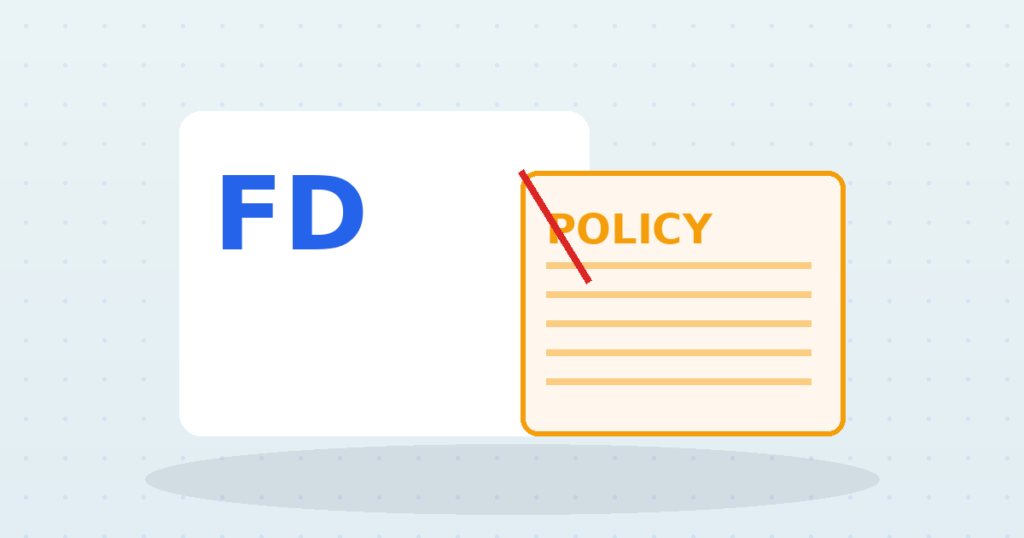
The pitch came from a college friend, which is how it usually comes. “It’s not just insurance — it builds cash value. The wealthy use it. Banks buy it.” Marcus signed a $1,000-a-month whole life policy at 28, feeling like he had joined a secret. The secret was on page 40: if he walks away in the first years he forfeits most of what he paid, the “guaranteed growth” nets out around 4–5% after decades, and his friend’s commission was roughly his entire first year of premiums.
Cash-value life insurance — whole life, universal life, and the “indexed” variants — pays some of the highest commissions in American finance: often 50–100% of the first year’s premium. That single fact explains the entire sales culture around it: the country-club seminars, the “be your own bank” videos, the friend who suddenly became a “financial professional”. Nobody cold-calls you to recommend a term policy and an index fund, because nobody gets paid a year of your premiums for that.
Insurance plus investment in one wrapper means both come out worse. $12,000 a year into a whole life policy for 30 years, growing at a typical ~4.5% internal return, builds roughly $765,000 of cash value. The unbundled version — a 20-year term policy for about $600 a year and the remaining $11,400 invested at 9% — ends near $1,694,000. Same outflow, same protection during the years his family actually needed it: $929,000 difference.
“Indexed universal life” was named so you would hear “index fund”. It is not one — participation caps and spreads mean you get a slice of the index’s good years and all of the fees. “Tax-free retirement income” means borrowing your own cash value and paying loan interest for the privilege. Every phrase in the brochure has a job, and the job is not clarity.
Illustration only. Market returns are not guaranteed and do not arrive in a straight line. Start investing →
Separate the two jobs. Protection: term life, 10–30 years, costs a restaurant dinner a month. Growth: index funds in your 401(k) and IRA, where a century of market return compounds for you instead of an actuary. If you already hold a policy, do not lapse it in anger — check surrender value, any tax consequences, and whether a 1035 exchange helps; the first years’ losses are sunk, but the next thirty are still yours.
Statistically, you need life insurance while children are young and debts are large — exactly the window term covers for pennies. “Permanent” mostly means permanently paying.
Illustrations are marketing, not contracts. Ask for the guaranteed column only, then run that rate in the calculator above and compare it with term-plus-index. The gap is the commission’s shadow.
Disclaimer: This article is for general information only and is not financial or tax advice. Consult a qualified advisor before making investment or tax decisions.
Claiming at 62 vs 70 can change your monthly benefit by more than 50%. See your own numbers…
Same contribution, two tax treatments, very different after-tax outcomes depending on one bet: your future tax bracket.
Skip the scary generic headline number. Work backward from your own real spending to find what you actually…