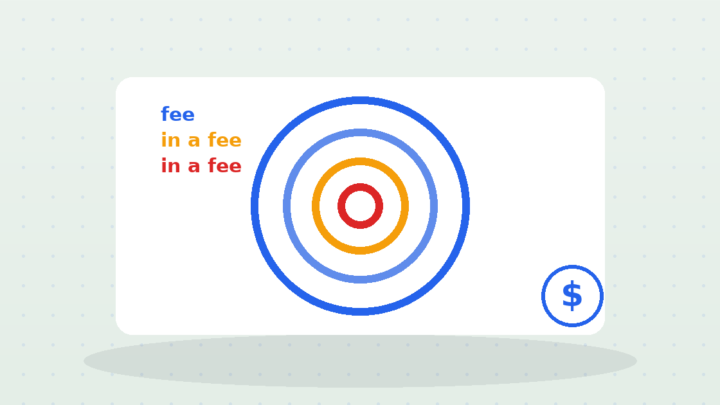
Target-Date Funds: A Fund Inside a Fund Inside a Fee
The default fund stacks a wrapper fee on underlying fees -- $118,000 over a career for a rebalancing…
 March 21, 2026by cyborg.vaibhav@gmail.com7 min read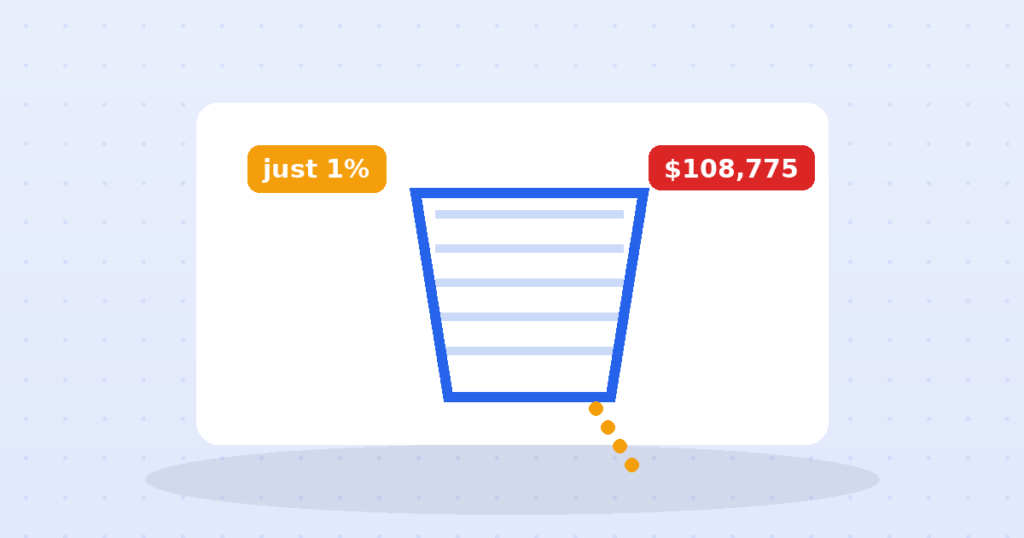
Dana Petrosky, a high school biology teacher in Albuquerque NM, has a 401(k) statement that says her fund returned 7% last year, and it is not lying, exactly. It is just quietly leaving out that the market returned 8%, and that the missing point went to a fund company she has never spoken to, for “management” she cannot describe. One percent. Nobody quits a job over one percent. That is precisely why it is one percent.
An expense ratio is charged on your entire balance, every year, forever — not on this year’s contribution, on everything you have ever saved. As your balance grows, the fee’s bite grows with it, and the money removed stops compounding for you permanently. A 1% fee does not cost you 1%. Over a career it costs you closer to a fifth of your final wealth.
$500 a month for 30 years at a 7% net return grows to about $613,500. The identical contributions at 6% net — the same market, minus one point of fees — reach about $504,800. The difference: $108,775. That is not a rounding error; that is several years of retirement, transferred to an intermediary in slices too thin to notice.
Because it is invisible at every moment it is charged. No invoice, no line item on your pay stub — just a net-asset value that grows slightly slower than it should. The fund industry spent decades marketing “professional management” while, over long periods, most actively managed funds trail cheap index funds after fees. The 401(k) menu your employer picked may be stocked with the expensive kind, because plan providers get paid through those funds too — a practice politely called revenue sharing.
Since 2012, the Department of Labor’s ERISA Section 404(a)(5) participant-fee-disclosure rule (29 CFR 2550.404a-5) has required every 401(k) plan with participant-directed accounts to send a quarterly statement listing, in an actual dollar amount, exactly what was deducted from that participant’s account for administrative and individual expenses during the quarter — not a percentage buried in a prospectus footnote, a real number in real dollars, mailed or emailed four times a year. Dana’s plan complies. She has received twenty-some of these statements since she was hired and has genuinely never opened one.
That is not a personal failing so much as the predictable outcome of a disclosure regime that satisfies the letter of transparency without doing anything to make the number legible against the one comparison that actually matters. The DOL’s own fact sheet on the rule confirms what it requires: dollar amounts charged, and a description of the services those charges paid for. It does not require the plan to show what the identical balance would have cost at a competing, lower-fee fund on the same menu — the statement can be fully compliant and still tell a participant nothing useful about whether the number is high or low. The rule solved the “can you find the fee” problem. It never touched the “can you tell if the fee is bad” problem, which is the one that actually costs people money.
What the calculator below actually does with your numbers is the comparison the statement leaves out: enter your balance and your plan’s real expense ratio, then enter the same balance at 0.1% — the modern low-cost index standard — and the calculator settles the question the quarterly mailing never asks, in the one unit that changes behavior: a dollar figure, not a percentage, with a decade attached to it.
Simplified: assumes your contribution percentage and salary stay level (real paychecks usually get raises, which this does not model) and applies the employer match every month with no cap modeled -- check your plan document for the exact match formula and any vesting schedule, since unvested employer contributions are not really yours until vested.
Open your plan menu and find each fund’s expense ratio — it is a single number, and under 0.2% is the modern standard for index options. Move future contributions to the cheapest broad index fund on the menu. If your plan has nothing under 0.5%, contribute to the employer match, then consider an IRA at a low-cost brokerage for the rest. And ignore last year’s star performer; you cannot buy last year, but you will definitely pay this year’s fee. Next quarter, actually open the 404(a)(5) statement — then open the plan’s fund menu next to it and compare the dollar figure against the cheapest option available. That five-minute habit is the whole fix, and it costs nothing but the reading time the fund company is quietly betting you won’t spend.
This is not an argument that every actively managed fund is a scam, or that Dana’s plan administrator did anything improper by sending a compliant 404(a)(5) statement — the disclosure rule is doing exactly what it was written to do, which is narrower than most participants assume. It is also not an argument to abandon your 401(k) for a taxable brokerage account chasing zero fees; the tax deferral and any employer match dwarf a one-point fee gap in most realistic scenarios, so the fix here is switching funds inside the plan, not leaving the plan. And it is not a claim that 0.1% is always achievable — some smaller employers genuinely don’t negotiate a low-cost menu, in which case the honest move is to take the match, then route additional savings to an IRA at a brokerage you choose yourself, where the expense-ratio floor is entirely in your control rather than a choice your employer’s plan committee made for you years ago and never revisited.
It’s also worth being precise about what “the fee compounds against you” actually means mechanically, since it’s easy to overstate. The expense ratio isn’t compounding in the sense of accruing interest on itself; it’s a percentage skimmed off the balance each year, and because the balance it’s skimmed from is larger in year twenty than in year one, the dollar amount removed grows even at a constant percentage rate. The real driver of the $108,775 gap in the earlier example is that every dollar removed in an early year is a dollar that can no longer generate its own returns in every later year — the fee’s true cost is measured in foregone future growth, not in the fee itself.
The manager must beat the index by more than the fee, every year, for decades — a feat few sustain. You are betting six figures of your retirement on it. The index fund does not need the bet.
The fund’s expense ratio is in your plan’s fee disclosure and on any fund-research site. The quarterly 404(a)(5) statement already has the dollar figure; if it takes more than five minutes to find, that is itself information worth acting on, not just noting and moving past.
Disclaimer: Dana Petrosky is a composite character based on common 401(k) participant patterns, not a real person. This article is for general information only and is not financial or tax advice. Consult a qualified advisor before making investment or tax decisions.
The default fund stacks a wrapper fee on underlying fees -- $118,000 over a career for a rebalancing…
If your employer matches 401(k) contributions and you're not contributing enough to get the full match, stop reading…
An employer match is close to free money. See what your salary, contribution rate, and match actually project…
The HSA shoebox strategy, 457(b) stacking, asset location, 0% capital gains harvesting, NUA and the mega-backdoor Roth, plus…
Each refi resets the interest-heavy years and rolls in fresh costs. Keep the rate; keep the clock honest.
Fear sells early claiming -- a permanent 30% cut to dodge a hypothetical 20% one. Run the break-even…